
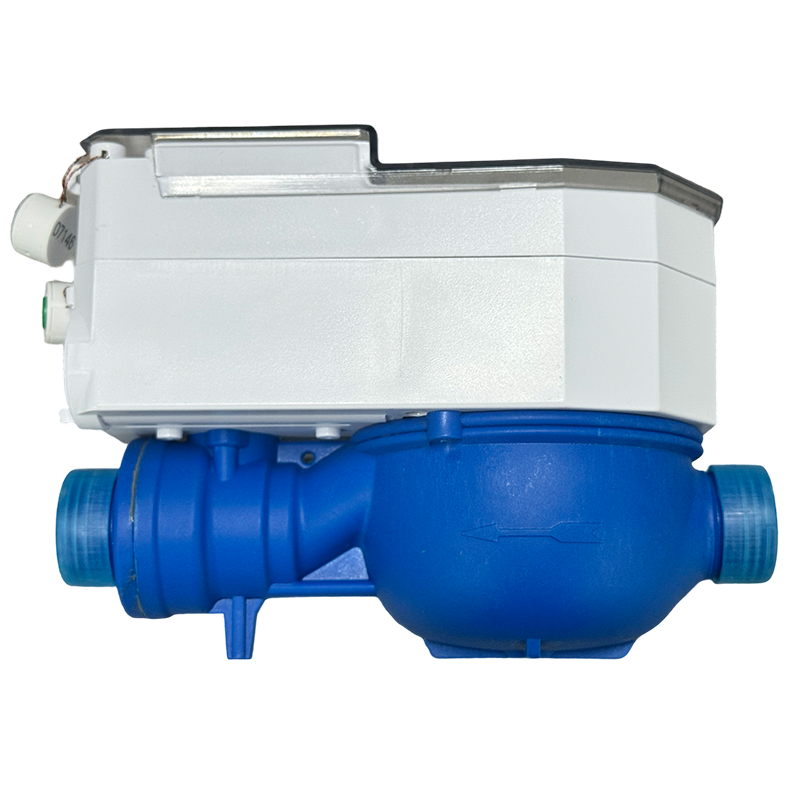
Core Functional Differences
Communication Methods:
•Wired Smart Water Meters: Data transmission relies on physical lines (M-BUS/RS-485), requiring a concentrator for data relay.
•Wireless Smart Water Meters: Have built-in communication modules (NB-IoT/LoRa) and connect directly to the cloud platform.
Power Supply Logic:
•Wired Smart Water Meters: Line-powered, eliminating battery concerns.
•Wireless Smart Water Meters: Battery-powered (lithium-based batteries are mainstream). Battery life (typically 8-15 years) depends on power consumption management.
Spatial Adaptability:
•Wired Smart Water Meters: Installation flexibility is limited by cable length, but they offer stable signals in high-interference environments.
•Wireless Smart Water Meters: Eliminate wiring challenges but may experience packet loss in areas with complex structures (on-site signal testing is recommended).
Maintenance Characteristics:
•Wired Smart Water Meters: Line faults require manual troubleshooting; concentrator failure can affect a large number of meters.
•Wireless Smart Water Meters: Support remote diagnostics/firmware upgrades; failure of a single meter does not pose a cascade risk.
Technical Notes:
•Wireless NB-IoT meters depend on carrier networks and are suitable for urban areas with good coverage. LoRa meters require building private gateways and are ideal for remote locations without network signals.
•Wired M-BUS meters can connect multiple meters in series on one bus, reducing wiring costs per meter, but require professional commissioning.
How to Match Technology to Scenario Requirements?
Scenarios Best for Wired Meters:
•Dense Deployment: Installations like high-rise building pipe shafts where ≥20 meters are in one well. Using an M-BUS bus saves up to 90% in wiring.
•Continuous Power Needs: Applications requiring high-frequency data collection (e.g., industrial monitoring every 5 minutes). Line power eliminates battery life anxiety.
•High-Shielding Environments: Signal dead zones like fully metal cabinets in basements or next to electrical rooms, where physical lines outperform wireless penetration.
Scenarios Best for Wireless Meters:
•Zero-Renovation Areas: Old residential buildings with tiled walls, heritage structures, or finished apartments where installation without drilling avoids disputes.
•Dispersed Monitoring Points: Garden irrigation, fire hydrants, independent stores. Autonomous single points reduce network complexity.
•Mobile Monitoring Needs: Temporary construction sites, event venues, and other short-term water usage scenarios allowing quick installation and relocation.
Key Feature Selection Guide:
•Ingress Protection (IP) & Explosion-Proof Rating: For pipe shaft environments, always select IP68 waterproofing and Explosion-proof certification.
•Data Security & Redundancy: Smart water projects often mandate dual-channel backup (e.g., NB-IoT + LoRa dual-mode) to avoid single-point signal failure.
•Measurement Accuracy Compensation: In areas with unstable water pressure (e.g., high-rise buildings), look for dynamic flow calibration algorithms (especially important for wireless meters managing power constraints).