
For Homeowners: Choose the “Hassle-Free” Type
Recommended: Basic IoT Water Meter (NB-IoT) or Photoelectric Direct-Read Water Meter
- Key Features:
- Check water usage via phone: Even elderly family members can view monthly bills on WeChat without waiting for meter readers.
- Early leak detection: Get instant phone alerts if a tap is left running.
- Freeze resistance and durability: Choose models with brass/stainless steel casing that can withstand -25°C (essential for northern regions).
- Tips to Avoid Pitfalls:
- For families of 3–5, choose a DN15 caliber (½-inch pipe); for villas, choose DN20 (¾-inch pipe).
- Leave 30 cm of operating space during installation, and flush pipes beforehand to prevent clogging.
For Rental Properties/Shops: Choose the “Cost-Control” Type
Recommended: IC Card Prepaid Water Meter or Bluetooth Prepaid Water Meter
- Key Features:
- Pay first, use later: Automatic shutoff if tenants fail to pay—no more advance payments or chasing down fees.
- Mobile recharge: Tenants pay via Alipay/WeChat; landlords manage remotely.
- Tiered pricing: Automatically charge higher rates for excess usage (e.g., restaurants in summer).
- Tips to Avoid Pitfalls:
- Small shops should choose DN20 caliber (¾-inch pipe); restaurants should choose DN25 (1-inch pipe) with anti-grease features.
- Opt for RF cards (non-insertion type) to avoid corroded ports and ensure longer lifespan.
For Rural/Mountainous Areas: Choose the “Rugged” Type
Recommended: Split-Type Water Meter or NB-IoT IoT Water Meter
- Key Features:
- Data transmission from well bottoms: Probe installed underground, display mounted on well wall for easy access.
- Works without signal: Use repeaters to cover hilly areas over several kilometers.
- Waterproof operation: Look for IP68 rating (submersible and fully functional).
- Tips to Avoid Pitfalls:
Test well-bottom signal with a phone before installation; choose mobile IoT cards for broader coverage.
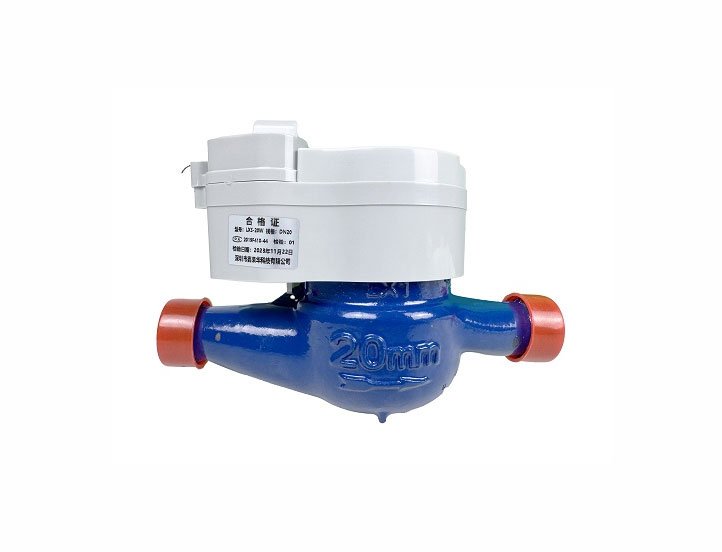
For Factories/Schools: Choose the “Efficient” Type
Recommended: Wireless Remote Water Meter (LoRa) or Ultrasonic Water Meter
- Key Features:
- Manage multiple meters with one card: Bulk recharge for 200 dormitory meters at once.
- High-precision measurement: ≤0.5% error for production line cooling water, saving thousands annually.
- 24/7 monitoring: Automatic alerts and valve shutoff in case of pipe bursts.
- Tips to Avoid Pitfalls:
- Choose DN25+ caliber for industrial areas, with pressure compensation to prevent fluctuations.
- Ultrasonic meters are unaffected by water quality, ideal for wastewater with impurities.
For Old Residential Communities: Choose the “Wire-Free” Type
Recommended: NB-IoT Dual-Mode Water Meter
- Key Features:
- No demolition or water shutdown: Direct replacement of old meters, operational same day.
- 10-year battery life: One replacement lasts a generation.
- Government platform integration: Data sent directly to water authorities, reducing disputes by 80%.
Final Reminders:
The most expensive smart water meter isn’t necessarily the best—match it to your scenario!
Homes prioritize convenience, rentals focus on cost control, rural areas need durability, and factories require precision.
Choose based on needs to truly save money!